

Pojazdy i linie
Die Dampflokomotive
ECONOMIC IMPACT OF STEAM IMPROVEMENTS :: OEKONOMISCHE EFFEKTE VON DAMPFLOKMODERNISIERUNGEN ::DISKUSSIONSPAPER DES INTERLOK-ANTEILSEIGNERS DIPL:-ING.NIKOLAUS SBAROUNIS, ATHEN
Hello everybody
In my copy of "Die Dampflokomotive", I discovered some enlightening extracts of sample steam loco maintenance records, which may give us some important clues on our research. Some records refer to Kriegslok 52 2467 (1st half of 1958 data, Stendal Depot). I've drawn up the following table, which I hope you'll help me to fill completely. It is based on the Loco's maintenance report sheet (Reichsbahn Form 947 09).Up to the 4th column, I follow the original form; beyond that, I use my own column headings for statistical data. For completeness' sake, I even included jobs uninfluenced by technical improvements; by the way, some of you may be inspired to draw up similar checklists for monitoring your locomotive maintenance.
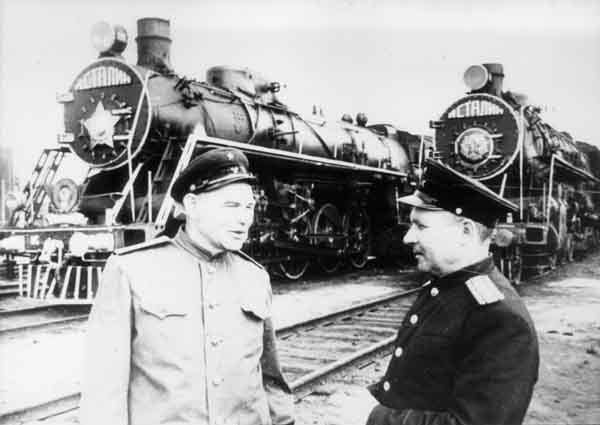
In 1983 I had also made some photocopies of a Soviet book printed in German, "Die Organisation der Lokomotivwirtschaft". The SZD had conducted some investigation on optimizing steam maintenance and using the Critical Path Method, they came up with a Gantt chart, which compacts the intermediate overhaul (equivalent to the German L3) of a "Felix Dzerzinsky" 1'E1'h2 (predecessor to the Chinese QJ) to 1330 man-hours distributed over just 5 days. The locos are handled in a way that:
Loco and technicians' downtime is minimized (Loco stays in workshop only 5 days)
Personnel use is as uniform as possible (when somebody finishes his task, the next loco is ready for him)
Using this Gantt chart as a source, I made the following assumptions on the man-hours required for every task and placed them in the table below:
Exhibit #1 Running maintenance (depot-level) routine tasks for 52 2467 and proposed modified coal-fired "Kriegslok" class 52
| Job # | Description | Responsible | Frequency (months) | Man-hours required | Yearly savings in | Remarks | |||
| Before | After | Before | After | Man-hours | Materials | ||||
| improvements | improvements | ||||||||
| A | Testbench trial | Arb A | 3 | 4 | 8 | 8 | 8 | ||
| B 1 | Boiler & accesssories Washing | Wm | 0.75 | 3 | 11.5 | 9.5 | 146 | Greatly reduced through proper water treatment | |
| 2 | Inspection of water gauges and armatures | Wm | 1 | 4 | 2 | 1.7 | 19.0 | reduced through proper water treatment(?) | |
| 3 | Fusible plug replacement | Wm | 3 | 3 | 1 | 1 | 0.0 | ||
| 4 | Throttle Inspection | Wm | 12 | 12 | 0.5 | 0.5 | 0.0 | ||
| 5 | Injector Inspection | Wm | 3 | 6 | 6.5 | 6.5 | 13.0 | reduced through proper water treatment(?) | |
| 6 | Blastpipe cleaning | Wm | 6 | 24 | 1.33333 | 1.333 | 2.0 | reduced through GPCS and better exhaust | |
| 7 | Examine blowdown device | Wm | 2 | 4 | 1 | 1 | 3.0 | Greatly reduced through proper water treatment | |
| 8 | Maintain blowdown device | Wm | 3 | 6 | 2 | 1 | 6.0 | Decidedly reduced through proper water treatment | |
| 9 | Examine spark arrester, ashpan, smokebox, rocking grate etc. | Wm | 1 | 4 | 8 | 4.571 | 82.3 | Reduced by 6/7 through GPCS | |
| 10 | Power test of feedwater pump | Tu-Grpl | 3 | 3 | 1 | 1 | 0.0 | ||
| 11 | feedwater pump piston cleaning and Examination | Wm | 1 | 1 | 1.33333 | 1.333 | 0.0 | ||
| 12 | Examine feedwater pump lubricator, piping and oil trap | Drv | 1 | 1 | 2 | 2 | 0.0 | ||
| 13 | cleaning of feedwater pump lubricator | Wm | 3 | 3 | 0.5 | 0.5 | 0.0 | ||
| 14 | feedwater heater watertightness Examination | Wm | 3 | 3 | 1.5 | 1.5 | 0.0 | ||
| 15 | feedwater heater thermometry | Tech A | 6 | 6 | 0.5 | 0.5 | 0.0 | ||
| 16 | Safety valve and manometer Examination | Tu-Grpl | 3 | 3 | 3 | 3 | 0.0 | ||
| 17 | Safety valve remounting and plumbing | Kp | 12 | 12 | 19 | 19 | 0.0 | ||
| 18 | Examination of superheater elements | Wm | 6 | 12 | 10 | 2 | 18.0 | Greatly Reduced through GPCS | |
| 19 | Examining of control drillings of the staybolts in the firebox | Wm | 1 | 12 | 16 | 2 | 190.0 | Reduced to negligible levels through GPCS and proper water treatment (?) | |
| C 1 | Tender Washing, cleaning of waterflow valves, Examination of water gauges | Wm | 3 | 3 | 6 | 6 | 0.0 | ||
| 2 | Examination & cleaning of axlebox oilpads | Wm | 2 | 2 | 4 | 24.0 | Eliminated through roller bearings | ||
| D 1 | Frames (incl. Bogies & Tender) Examination for breakages and stability of all assemblies incl. between Frames and boiler | Arb A | 6 | 6 | 4 | 4 | |||
| 2 | Graphit lubrication of the boiler supports | Wm | 3 | 3 | 1 | 1 | 0.0 | ||
| 3 | cleaning bolsters, slideplates, resetting devices of pilot trucks, Examination of lubricating devices | Wm | 3 | 4 | 8 | 4 | 20.0 | Reduced through roller bearings | |
| E | Suspension and equalizing Deep cleaning & Examination for breakages and correct position | Wm | 6 | 6 | 6 | 6 | 0 | ||
| F 1 | Wheelsets and axleboxes Remeasuring tyres, Examination of wheels, tyres and crankpins for breakages and stability | Wm | 1 | 1 | 20 | 20 | .0 | ||
| 2 | Examination of rod bearings | Wm | 3 | 12 | 6 | 4 | 20.0 | Greatly Reduced through roller bearings | |
| 3 | cleaning & Examination of upper and lower lubrication of rod bearings | Lokf | 1 | 12 | 8 | 0 | 96.0 | Eliminated through roller bearings | |
| G 1 | Cylinders and pistons Maintenance of piston incl. crosshead and gland | Wm | 6 | 6 | 5 | 5 | 0.0 | ||
| 2 | Reexamination of bearing boxes | Wm | 1 | 1 | 3 | 3 | 0.0 | ||
| H | piston valves Maintenance | Wm | 1.5 | 1.5 | 1 | 1 | 0.0 | ||
| I | Maintenance of bypass and automatic air intake valves | Wm | 4 | 4 | 3 | 3 | 0.0 | ||
| K 1 | Rods and their bearings Examination for cracks | Wm | 3 | 3 | 12 | 10 | 8.0 | ||
| 2 | cleaning & Examination of oiling openings of bearings | Wm | 6 | 6 | 12 | 24.0 | Eliminated through roller bearings | ||
| 3 | Examination of articulated pins of bearings | Wm | 3 | 3 | 10 | 40.0 | Eliminated through roller bearings | ||
| L 1 | Brakes Intermediate Brake Maintenance | Wm | 6 | 6 | 30 | 30 | 0.0 | ||
| 2 | Drainage of entire braking system | Lokf | 1 | 1 | 1 | 1 | 0.0 | ||
| 3 | Power test of air pump | Tu-Grpl | 3 | 3 | 2 | 2 | 0.0 | ||
| 4 | cleaning & Examination of air pump, vacuum and pressure valves, control piston, air channels | Wm | 1 | 1 | 10 | 10 | 0.0 | ||
| 5 | Examination of airpump pressure regulator, lubricators with piping and oil traps | Lokf | 1 | 1 | 5 | 5 | 0.0 | ||
| 6 | lubricator cleaning | Lokf | 3 | 3 | 1 | 1 | 0.0 | ||
| 7 | Greasing of entire brake linkage (bolts, pins etc.) | Lokf | 1 | 1 | 4 | 4 | 0.0 | ||
| M 1 | Coupling and buffing devices Examination of Coupling and buffing devices, drawbar, cowcatcher and feedwater pipes | Wm | 3 | 3 | 4 | 4 | 0.0 | ||
| 2 | cleaning of oil boxes incl. pipes | Lokf | 1 | 1 | 2 | 2 | 0.0 | ||
| N 1 | Miscelaneous cleaning & Examination of sander, steam jets and sand pipes | Lokf | 1 | 1 | 1 | 1 | 0.0 | ||
| 2 | Examination of all train heating devices (winter) | Lokf | 1 | 1 | 2 | 2 | 0.0 | Only in Winter | |
| 3 | Examination of all automatic drainage cocks for air- and feedwater pumps, generator etc. incl. piping | Lokf | 1 | 1 | 3 | 3 | 0.0 | ||
| 4 | Examination of electric lighting incl. generator | Wm | 2 | 2 | 2 | 2 | 0.0 | ||
| 5 | Examination of all lubricators for pistons, piston valves, bearings and their slide plates incl. piping and oil traps. | Lokf | 1 | 1 | 4 | 4 | 0.0 | ||
| O | Tools and equipment Check presence and useability | Ger-V | 6 | 6 | 3 | 3 | 0 | ||
| Yearly totals | 1796 | 1077 | 719 |
Studying the original sheet (and reading a little between the lines) reveals that the loco had an unscheduled 16-day maintenance session in the workshop, 2 two-day maintenance sessions and 7 one-day maintenance sessions, in total 27 days for maintenance. The reasons for the 16-day session were some cracks in the firebox and ashpan damage, which probably would have been totally avoided on a GPCS-fitted 52 with proper water treatment. I have to add a 1-day penalty for transportation to and from the workshop location. For each session we must also count a further day out of traffic for dropping and re-lighting the fire, which results in a total loss of 38 days. During that 6-month period, the loco was also in cold reserve for 2 weeks, which may be attributed to seasonal traffic fluctuations. This must be considered typical, since the loco was then at about the middle of its suggested 30-year life cycle and the DR employed much surplus antiquated motive power for its less regular or intensive duties. There was also much newer -or rebuilt- motive power for the most demanding and tip-top services, which preferrably should spend much less time in cold reserve. So, in terms of availability, 52 2467 was available on 130 out of 168 days, i.e. 77.38% of the time.
If my assumptions on man-hours are correct and we assume a similar saving on materials, we would have a total reduction of 40% in maintenance effort
Exhibit #2 Extract of 92 822's boiler repair record: Within 7 months (between 10/54 and 5/55) loco 92 822 (Dh2t) had its firebox drilled 3 times, had 2 fusible plugs and 10 stays changed. It also presented 3 times boiler scale up to 4mm thickness, 1 time leakage of several tubes, a slight deformation of the lower left firebox side and excessive corrosion on the fire side of the firebox backplate.
Observations
It seems that through the fundamental improvements, GPCS, roller bearings and decent water treatment, the remaining routine maintenance can be compacted into 1 day/month. Since most of the tasks will not require dropping the fire, we can assume that this will be necessary every 2 months. The monthly tasks will be able to be performed by the drivers with their on-board equipment, so they will be able to be performed at layover times at terminals (not necessarily at the engine's home depot location). A problem seems to be the maintenance of piston valves, requiring shed attention every 45 days. So, if no remedy to this is thought of, let's accept 4 days of preventive maintenance on-shed in the 6-month period.
Unscheduled (corrective) maintenance in the workshop will be greatly reduced (since the boiler and motion are relieved from their headaches), but to be on the safe side, let's allow an average of another 4 days in the 6-month period for workshop attendance due to minor accidents, careless handling etc. So, we reduced downtime to 8 days in the 6-month period and the loco is available for 95.238% of the time. This is attributed to the minimisation of water- and fireside corrosion of the boiler and the elimination of the troublesome plain bearings through roller ones.
Is the average mileage 95.238/77.38=1.23 times longer than that of the unrebuilt loco? No, we're not finished yet. Apart from the shed-based maintenance, we had the daily cleaning of smokebox, ashpan, tubes etc. and the oiling around, which consume another considerable portion of the day. These tasks can now be reduced to once a week, saving about 4 hours a day, and total mileage increase must be in the order of 50% (the active range of locos is also increased). Fuel economy of 37-40% with GPCS allows refuelling stops to be proportionally reduced and remain in accordance with the general downtime reduction. So now, instead of 2 diesels replacing 3 equivalent steamers, it takes an equal number of diesels to replace modernized steam, which is hardly an achievement for diesel salesmen to boast about.
However, for the above statistics to be valid, every workshop must be constantly occupied with locos, so that the various tasks take place continuously and repeatedly. If, as an average, 7 modernized locos are turned out by the workshops each month (counting unscheduled overhauls as well), a dedicated steam workshop must handle a fleet of at least 146 if it works on weekends too, or 120 if it doesn't. With smaller fleets, economies of scale will be lost, unless the maintenance personnel is occupied with non-steam tasks in the meantime (e.g. tank cars are a good part-time occupation for boilermakers). In general, we must address the maintenance question not only an a loco-by-loco basis, but at a larger, fleetwise scale as well. Certainly, a full-time steam technician is better accustomed and thus quicker and more confident in steam maintenance than a casual one.
Questions
I'd like your comments on the Exhibit #1, especially man-hours required for each job, since I had to make some assumptions and extrapolations. Probably some values are related to the loco's physical characteristics, e.g. man-hours for grate cleaning must be proportional to the grate surface. I may have sorted out the availability question, but I'm still missing the economic impact on repairs.
What is the materials' cost, in comparison to the labour cost? An estimate from 1983 for the overhaul of the 2' gauge "Pelion" 1'Cn2t in Volos allows for materials only 1/4 of the labour cost. Can this be correct? I think materials will amount at least up to the labour cost.
I'd like some statistics about the frequency of tyre re-profiling on multi-cylinder locos.
A controversial fact worrying me about the reliability of cost predictions is that Wardale gives highly varying maintenance costs for seemingly similar classes and operating conditions (Red devil, page 31). I was aware since many years that considerable differences were observed even between locos of the same class based on the same depots and operating on the same diagrams (see for examples "Franco-Crosti: Letzte Chance der Dampflok" by Gänsfuß and Fach, which refers to modernized locos of the 60's, not to 19th century teakettles. One might be tempted to assume that on a steam loco too many uncontrollable and unpredictable parameters exist, which can cause an unacceptable deviation between theory and reality. For example, would Wardale obtain the same results if he'd chosen to rebuild say 25NC3452 instead of 3450? There seems to be some degree of uncertainity in any steam investment, which could make railway administrations reluctant to take the risk. Will any opponent of steam be right to question us on what basis we made our assumptions, especially against other forms of motive power, which claim a relatively uniform and predictable behaviour?
Strangely enough, one of steam's advantages, its robustness, appears to be one of the causes of this: When a diesel's minor component fails, the loco becomes almost always immobilized or heavily ineffective, forcing the railway to undertake corrective action immediately. By contrast, a steamer can soldier on and on with several defects, which on the long term result in cumulative damage and increased fuel costs. A diesel is equipped with sophisticated monitoring systems, which instantly warn crews when something is wrong. By contrast, to diagnose the cause of suspiciously reduced performance on a steamer requires much brain usage, an increasingly unpopular activity in our days. Imagine what the situation will be with the next human generation, expecting a computer to tell them what's right or wrong.
Also note, on "Red Devil" page 75 that 50% of fitter man-hours in running sheds go into attending "trivial defects" of "small items". Wardale attributes this to "component unreliability caused by poor detail design", but is this the only cause? If yes, why this varying maintenance cost on locos with more or less the same components?
Some remarks on statistic observations
Before adopting the statistic comparisons between steam and other traction, we must be sure they refer to comparable situations. The following pitfalls must be avoided:
In the late steam era, the tip-top and most intensive services were reserved for diesels, which thus showed an artificially increased productivity. In contrast, steam was largely confined to works trains, emergency standby, local pickup freights, backwood branches, switching which hardly contributed to revenue train-miles. For reasons of prestige and -supposedly- environmental protection, steam was kept out of traffic-intensive busy rail centres as much as possible.
The steam fleets were up to the end mixed bags of modern and completely outdated classes. So, when using data for comparisons we must never use all-loco averages, but restrict analysis to the best classes available. By contrast, almost all available diesels were still quite new at the time of complete dieselization. After the introduction of diesels, everybody turned their attention to them and steam maintenance became less and less careful (partly due to the fact that the surplus steam engines were expected to soldier on for secondary services until completely withdrawn). Nobody cared anymore for optimal steam engine utilization, improvement of their cost/benefit ratio and keeping them on the best suited tasks for them. Steam was regarded as necessary evil, only required to fill gaps until all the diesels could be purchased, the personnel re-trained and the facilities adapted for them.
It seems that some electric/diesel advocates in the 50's deliberately compared unmodernized steamers under the above unfavorable operating conditions with state-of-the-art electrics/diesels
It would seem appropriate to compare statistics immediately before commencement and immediately after completion of dieselization. It must be made sure, however, that in the meantime no changes have taken place in the railroad's operating requirements. Dieselization usually coincided with a general decline of rail systems and the loss of branchlines, l-c-l freight and other "relaxed" operations which kept loco-mileage low. Perhaps it's better to make some extrapolations and predict what TODAY'S services would cost if they were operated by modern steam.
Largely thanks to the postings in the steam_tech-email-discussion group, I'm beginning to think that the world's best suited railway for objective steam/diesel statistics comparisons with minimal data manipulation and assumptions would be the Norfolk & Western. The only useful side effect of its dieselization may be the provision of a sound statistical basis for our analysis. Same may be true for the Rio Turbio line, but its traffic is not as diversified as the N&W's.
Take your time to think this over! I prefer well-thought and documented remarks than immediate, spontaneous and superficial reactionsLast Update: 18/5/1999
Email: sbaros@excite.com
P.S. I was able to convert my MS-Word and Excel files to HTML using the following guys' software; try it!
Copyright ©
1997-1998 Eon Solutions Ltd
HTML
pages created with EasyHTML/Help
This file has been created
(at 11/5/99 17:39 36291.735752315) with the evaluation or
unregistered copy of
EasyHTML/Help from Eon Solutions Ltd
(Tel: +44 1625 827037, Email: support@easyhtmlhelp.com)
http://www.easyhtml.com